
Every year, thousands of patients in Michigan undergoing cancer treatment begin losing weight they can’t afford to lose. Not because they’re dieting. Not because they’re trying to. But because their bodies are fighting a metabolic battle known as cachexia — a complex wasting syndrome that causes unintentional weight loss, muscle breakdown, fatigue, and loss of appetite.
Globally, cachexia affects an estimated 9 million people, and it’s especially common in advanced cancer, impacting up to 30% of cancer patients. For many families, it’s one of the most distressing parts of serious illness: watching someone eat less, grow weaker, and struggle to maintain strength despite everyone’s best efforts.
Because there is no standardized cure or gold-standard treatment for cachexia, patients and caregivers often look for supportive options. One therapy that frequently comes up in Michigan — where both medical and adult-use cannabis are legal — is medical cannabis.

What Is Cachexia? (And How Is It Different From Normal Weight Loss?)

Cachexia is a complex metabolic syndrome that causes involuntary weight loss, muscle wasting, and appetite loss — most commonly in people with cancer or other serious chronic diseases.
Unlike simple weight loss from dieting or poor nutrition, cachexia:
- Cannot be fully reversed by eating more calories
- Involves active muscle breakdown
- Is driven by inflammation and metabolic changes
- Often progresses despite nutritional support
In cancer patients, this condition is called cancer-associated cachexia (CAC).
Cachexia vs. Malnutrition vs. Starvation
| Condition | What Causes It | Can It Be Reversed by Eating More? |
|---|---|---|
| Starvation | Not enough calories | Yes |
| Malnutrition | Poor nutrient intake or absorption | Often yes |
| Cachexia | Disease-driven metabolic changes + inflammation | Not fully |
Common Signs of Cachexia
- Doctors often look for:
- Unintentional weight loss of more than 5% in 6–12 months
- Visible muscle wasting (especially in arms, shoulders, thighs)
- Persistent fatigue
- Decreased appetite (anorexia)
- Reduced strength and functional decline
- In cancer patients, cachexia is associated with:
- Lower tolerance to chemotherapy
- Reduced quality of life
- Higher complication risk
- Increased mortality
Why Cachexia Is So Difficult to Treat
There are currently no standardized treatment guidelines and no single medication that reliably reverses cachexia.
The condition is driven by:
- Inflammatory cytokines (like TNF-alpha and IL-6)
- Hormonal disruption
- Altered metabolism
- Tumor-host interactions
This means simply increasing calories is not enough. The body’s signaling pathways are altered.
And this is exactly why therapies like cannabinoids are being explored — because they may influence appetite pathways and inflammatory responses.
Why Is Cannabis Considered for Cachexia?
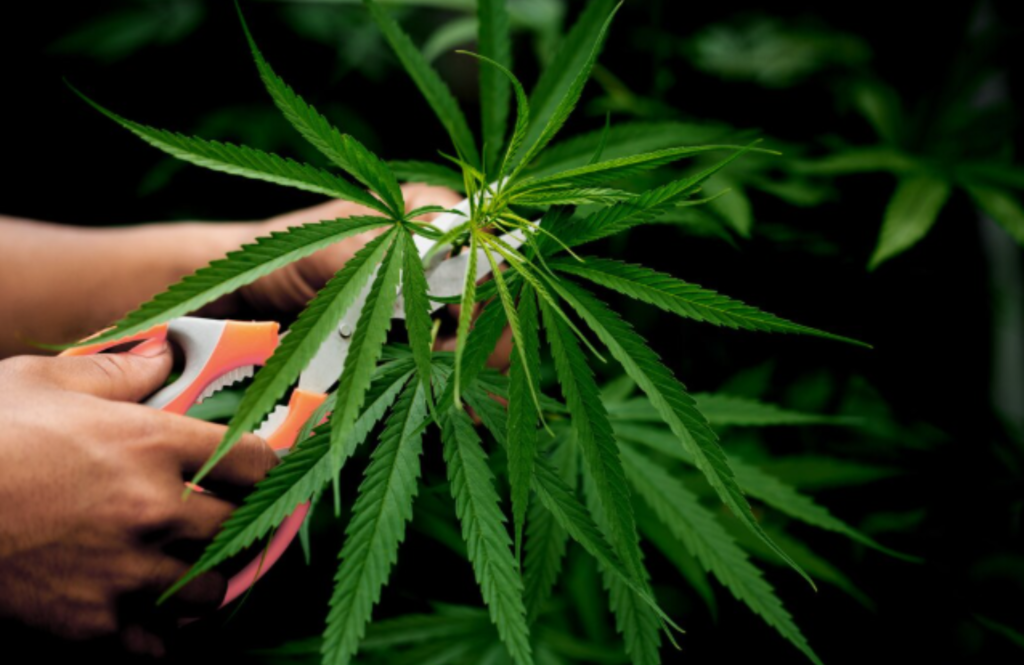
If cachexia causes appetite loss and weight decline, it makes sense to ask:
Can something known to stimulate appetite help?
Cannabis has long been associated with increased hunger — often called “the munchies.” But the science behind that effect is more sophisticated than the nickname suggests.
The Endocannabinoid System and Appetite
The human body has a regulatory network called the endocannabinoid system (ECS). It plays a role in:
- Appetite and satiety
- Energy balance
- Metabolism
- Inflammation
- Nausea control
Two primary receptors are involved:
- CB1 receptors – Mostly found in the brain and central nervous system. Strongly involved in appetite stimulation.
- CB2 receptors – Found more in immune cells and peripheral tissues. Associated with inflammation and immune regulation.
When cannabinoids activate CB1 receptors in the brain, they can stimulate orexigenic (appetite-promoting) pathways and reduce signals that suppress hunger.
What About CBD?
Cannabidiol (CBD) does not directly stimulate appetite the way THC does.
However, researchers are interested in CBD because:
- It has anti-inflammatory properties
- It may modulate cytokines like TNF-alpha and IL-6
- It may influence immune signaling involved in cachexia
Since cachexia is partly driven by systemic inflammation and metabolic disruption, CBD’s immunomodulatory effects are theoretically relevant.
Why Appetite Increase Isn’t the Same as Reversing Cachexia
Cachexia is not simply “not eating enough.”
It involves:
- Accelerated muscle breakdown
- Hormonal imbalance
- Tumor-driven metabolic changes
So even if cannabis increases hunger temporarily, it may not stop the underlying muscle-wasting process.

Medical Cannabis for Cachexia in Michigan
Is Cachexia a Qualifying Condition in Michigan?
Cannabis has long been associated with increased hunger — often called “the munchies.” But the science behind that effect is more sophisticated than the nickname suggests.
Medical vs Adult-Use Cannabis in Michigan
The human body has a regulatory network called the endocannabinoid system (ECS). It plays a role in:
- Appetite and satiety
- Energy balance
- Metabolism
- Inflammation
- Nausea control
Two primary receptors are involved:
- CB1 receptors – Mostly found in the brain and central nervous system. Strongly involved in appetite stimulation.
- CB2 receptors – Found more in immune cells and peripheral tissues. Associated with inflammation and immune regulation.
When cannabinoids activate CB1 receptors in the brain, they can stimulate orexigenic (appetite-promoting) pathways and reduce signals that suppress hunger.
What Patients Should Realistically Expect
Medical cannabis may help with:
- Appetite stimulation (in some patients)
- Nausea and vomiting
- Sleep disruption
- Anxiety and mood support
- Symptom comfort
Medical cannabis is not proven to:
- Reverse cachexia
- Restore lost muscle mass
- Replace cancer treatment
- Improve survival outcomes
THC and OCD: Important Considerations
THC affects individuals very differently.
Some patients report:
- Temporary anxiety relief
- Improved sleep
- Reduced emotional intensity
Others experience:
- Increased anxiety
- Heightened obsessive thinking
- Worsened rumination at higher doses
This variability makes careful dosing, product selection, and medical oversight especially important for OCD patients.
If appropriate, certification for medical marijuana in Michigan may be provided.
FAQs

Can medical cannabis cure cachexia?
No. Current research does not show that medical cannabis can cure or reverse cachexia. While cannabis may help improve appetite or reduce nausea in some patients, it has not been proven to restore muscle mass or stop the underlying metabolic processes that drive cachexia
Does THC help cancer patients gain weight?
THC may increase appetite in some patients. However, clinical trials have not consistently shown significant or sustained weight gain compared to placebo or standard appetite stimulants. Increased hunger does not always translate into meaningful weight or muscle gain.
Is cannabis proven to help cancer-associated cachexia?
There is no high-quality evidence proving that cannabinoids are effective as a standalone treatment for cancer-associated cachexia. Some small studies show appetite improvements, but larger systematic reviews and meta-analyses have not demonstrated consistent benefits in weight gain or overall quality of life.
What is better for cachexia: THC or CBD?
THC is more directly associated with appetite stimulation.
CBD does not strongly stimulate appetite but may have anti-inflammatory properties.
Most clinical research on cachexia has focused on THC or synthetic THC analogs such as dronabinol. There is currently no strong evidence that CBD alone improves cachexia outcomes.
Is cachexia a qualifying condition for a Michigan medical marijuana card?
Cachexia itself is not listed as a standalone qualifying condition in Michigan. However, cancer is a qualifying condition. Patients experiencing cancer-associated cachexia may qualify under their cancer diagnosis with physician certification.
Can cannabis replace standard appetite stimulants like megestrol acetate?
Research suggests that standard appetite stimulants such as megestrol acetate may lead to greater weight gain than dronabinol (synthetic THC). Cannabis should not replace prescribed treatments without medical guidance.
Are there specific cannabis strains for OCD?
Evidence is mixed. Some patients report improved comfort and appetite, but pooled clinical trial data have not shown consistent improvements in global quality of life compared to control treatments.
How quickly does medical cannabis work?
Cannabis can cause side effects such as dizziness, sedation, anxiety, dry mouth, or cognitive impairment. Frail or medically complex patients may be more vulnerable to these effects. Medical supervision is recommended.
Is medical cannabis used for teens with OCD in Michigan?
Cachexia is driven by inflammation and metabolic disruption, not just reduced calorie intake. Even if appetite improves, the underlying muscle-wasting processes may continue.
Can Medical Cannabis Help Treat Cachexia in Michigan?
Cachexia is not simply weight loss. It is a complex, disease-driven metabolic syndrome that involves muscle breakdown, inflammation, appetite loss, and physical decline — most commonly in advanced cancer.
Because there is no standardized cure and limited effective treatments, it is understandable that patients and families look for supportive options. Medical cannabis is often considered because of its well-known ability to stimulate appetite and reduce nausea.