
Severe nausea can make even simple daily activities feel overwhelming. Persistent queasiness, vomiting, appetite loss, and fatigue can interfere with hydration, nutrition, sleep, and emotional well-being. For some individuals, nausea is temporary. For others — especially those living with chronic illness or undergoing medical treatments — it becomes a debilitating ongoing symptom.
As patients search for ways to manage nausea that continues despite standard therapies, one question often arises:
Can medical cannabis help with severe nausea?
While cannabis is not a cure for the underlying conditions that cause nausea, many patients in Michigan consider it a supportive option for symptom relief when conventional treatments provide incomplete results.
Overview of Cannabis Laws in Illinois
Illinois legalized medical cannabis in 2013 under the Compassionate Use of Medical Cannabis Program Act. Later, in 2019, the state legalized recreational cannabis through the Cannabis Regulation and Tax Act, allowing adult-use sales starting January 1, 2020.
Today, both systems operate side by side — but they serve different purposes:
- Medical cannabis: Designed for patients with qualifying health conditions
- Recreational cannabis: Available to adults 21+ for general use
Who Can Access Each Program?
Medical Cannabis
- To access medical cannabis in Illinois, individuals must:
- Be diagnosed with a qualifying medical condition
- Obtain certification from a licensed physician
- Apply for a medical cannabis card through the state
- Qualifying conditions include (but are not limited to):
- Chronic pain | Cancer
- PTSD | Multiple sclerosis
- Epilepsy | Severe fibromyalgia
Patients are officially registered in the state system and receive legal recognition as medical users.
Recreational Cannabis
- Recreational cannabis is available to:
- Adults aged 21 or older
- No medical documentation required
- Apply for a medical cannabis card through the state
Consumers can purchase cannabis products directly from licensed dispensaries with a valid government-issued ID.
Key Differences Between Medical and Recreational Cannabis
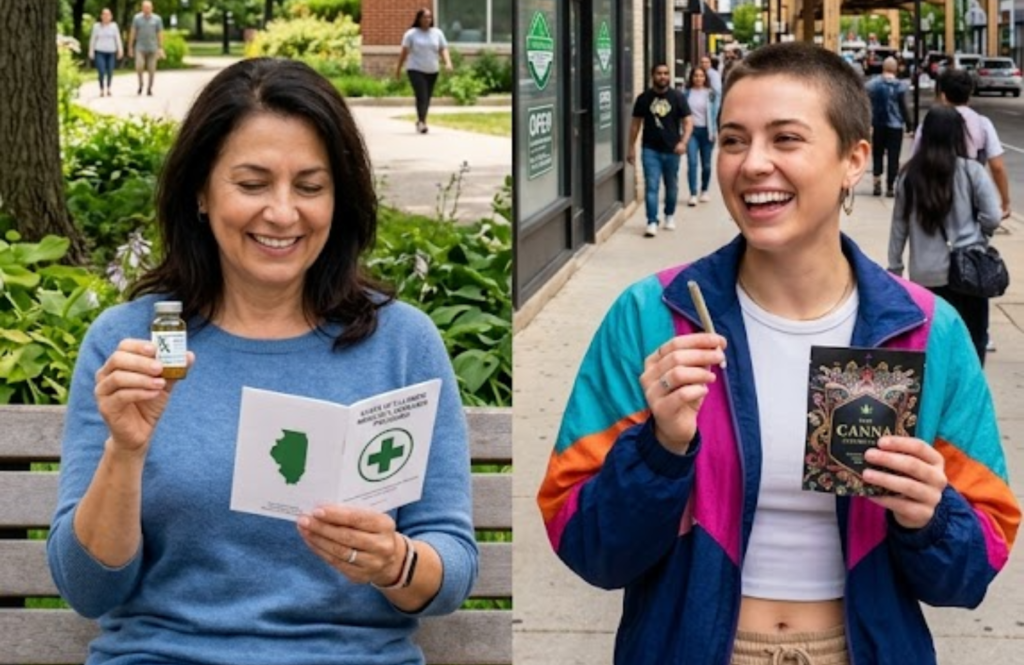
1. Taxes and Cost
One of the biggest differences is how much you pay.
Medical Cannabis
- Exempt from state cannabis excise taxes
- Only subject to standard sales tax (around 1–2% depending on location)
Recreational Cannabis
Illinois applies a tiered tax system based on product type and THC content:
- 10% tax on cannabis flower or products with THC below 35%
- 20% tax on infused products (like edibles)
- 25% tax on products with THC above 35%
On top of this, local taxes may apply — meaning total tax rates can exceed 30% in some areas.
What this means:
Medical patients often save significantly on long-term cannabis use.
2. Possession Limits
Illinois law sets different possession limits depending on whether you are a medical patient or recreational user.
Medical Cannabis
- Up to 2.5 ounces (70 grams) every 14 days
- Physicians may recommend higher amounts in certain cases
Recreational Cannabis (Illinois Residents)
- 30 grams of cannabis flower
- 5 grams of cannabis concentrate
- 500 mg of THC in infused products
Recreational Cannabis (Non-Residents)
- Half of the resident limits
What this means:
Medical patients are allowed higher and more flexible purchase limits, which can be important for ongoing symptom management.
3. Age Requirements
- Medical cannabis: Available to patients under 21 with physician approval and caregiver involvement
- Recreational cannabis: Strictly limited to individuals aged 21 and older
This makes the medical program the only legal pathway for younger patients who require cannabis for therapeutic reasons.
4. Product Access and Potency
Both medical and recreational dispensaries may offer similar products, including:
- Flower
- Edibles
- Concentrates
- Tinctures
- Topicals
However, medical patients may benefit from:
- Access to higher potency products where appropriate
- Greater flexibility in dosing recommendations
- Guidance from healthcare providers
5. Legal Protections
Medical cannabis patients receive additional legal protections under Illinois law.
These may include:
- Protection against discrimination in certain housing situations
- Specific workplace protections (though employers may still enforce drug policies)
- Legal recognition of cannabis use for medical purposes
Recreational users do not receive the same level of legal protection.
6. Home Cultivation Rules
Illinois law allows limited home cultivation — but only for medical patients.
Medical Cannabis
- May grow up to 5 plants per household
- Must be for personal medical use
- Plants must be secured and not visible to the public
Recreational Cannabis
- Home cultivation is not allowed
- Growing plants without a medical card can result in penalties
7. Caregiver Access
Medical cannabis programs allow caregivers to assist patients.
Caregivers can:
- Purchase cannabis on behalf of a patient
- Help manage dosing and access
- Support patients with mobility or health limitations
Recreational cannabis does not include a caregiver system.
Why Some People Choose Medical Cannabis Over Recreational

Even though recreational cannabis is widely accessible, many individuals still choose to register as medical patients.
Common reasons include:
- Lower long-term costs due to reduced taxes
- Higher possession limits
- Legal protections
- Access for individuals under 21
- Structured medical oversight
- Ability to grow cannabis at home
For people using cannabis regularly to manage symptoms, these differences can be significant.
When Recreational Cannabis May Be Enough
Recreational cannabis may be sufficient for individuals who:
- Use cannabis occasionally
- Do not have a qualifying medical condition
- Prefer not to go through the certification process
- Want immediate access without paperwork
However, for consistent or long-term use, costs and limits may become a factor.

Safety and Responsible Use
Regardless of whether cannabis is used medically or recreationally, safety considerations remain important.
Potential risks include
- Impaired coordination or judgment
- Anxiety or discomfort with higher THC doses
- Interaction with medications
- Overconsumption, especially with edibles
Best practices include
- Starting with low doses
- Understanding product labeling
- Avoiding driving under the influence
- Consulting a healthcare provider if using cannabis for symptom management
FAQs
Is medical cannabis cheaper than recreational in Illinois?
Yes. Medical cannabis is exempt from state excise taxes, making it significantly more affordable over time.
Can employers still enforce drug policies if you’re a medical cannabis patient?
Yes. While medical patients have certain protections, employers can still enforce drug-free workplace policies, particularly in safety-sensitive roles.
Can you switch from recreational to medical cannabis?
Yes. Individuals can apply for a medical cannabis card if they meet eligibility requirements.
Is there a purchase limit difference between medical and recreational cannabis?
Yes. Medical cannabis patients can purchase up to 2.5 ounces every 14 days (or more with physician approval), while recreational users are limited to smaller amounts depending on residency status.
Do medical patients get stronger products?
In some cases, medical patients may access higher potency or more tailored dosing options.
Can recreational users grow cannabis at home?
No. Only registered medical patients are allowed to cultivate cannabis legally at home.
Do medical cannabis patients pay less in the long run?
Yes. Due to lower taxes and higher purchase limits, medical patients often spend less over time, especially if they use cannabis regularly.
Do you need a doctor for recreational cannabis?
Are medical cannabis patients prioritized at dispensaries?
In some locations, dispensaries may offer separate lines or priority service for medical patients, especially during high-demand periods.
Can medical cannabis be used in public places?
No. Both medical and recreational cannabis use are restricted to private spaces. Public consumption is not allowed under Illinois law.
What This Means for Illinois Residents
Illinois offers both medical and recreational cannabis access, but the two systems are designed for different needs.
Recreational cannabis provides convenience and accessibility. Medical cannabis offers structure, affordability, and patient-focused benefits.
For occasional users, recreational access may be sufficient. For individuals managing ongoing symptoms or health conditions, the medical program often provides greater flexibility, lower costs, and additional protections.
The right choice depends on how cannabis fits into your life — whether as a casual option or as part of a long-term wellness strategy.